

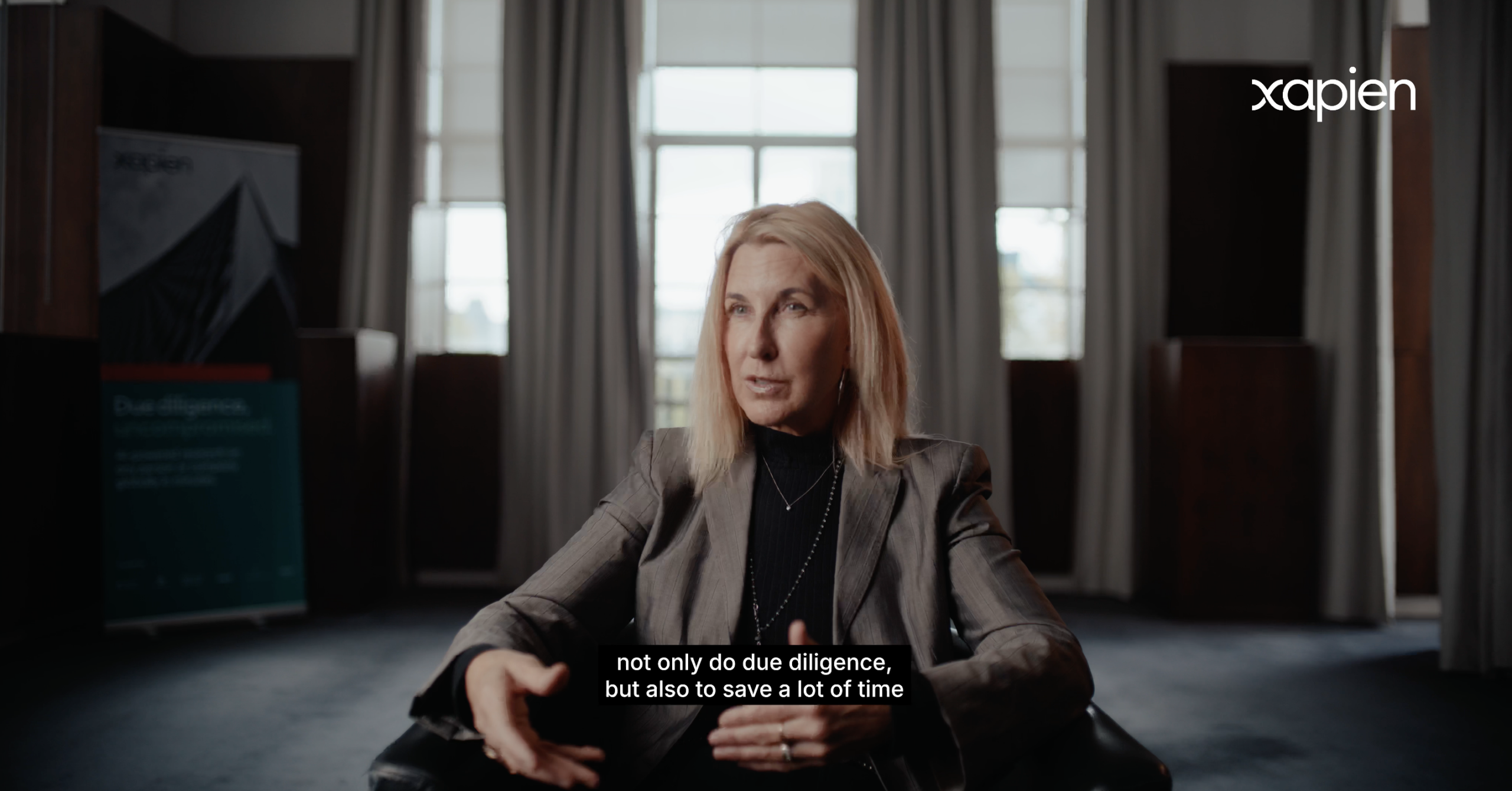
Xapien transformation stories is a series of conversations with senior professionals across risk, compliance, legal and intelligence. We asked them all the same question: what does genuinely good due diligence look like now, and what does it take to get there?
Dina Zelleke, Consultant, former Due Diligence leader at Harvard University: moving the starting position of research and accelerating the speed
When Dina Zelleke, former Director of Research at Harvard University, was building the university’s due diligence function, the process started with third-party providers. This meant sending a name, waiting up to ten business days, and then paying a variable fee depending on the complexity of the entity. From a cost perspective it was unpredictable, from a time perspective it was painfully slow. With reputational risk always front of mind at an institution that lives in the public eye, that pace was a particular source of pressure.
That pressure increased when high-profile donor relationships sparked reputational crises at major universities and exposed how much traditional screening had been missing. Determined to safeguard the values and reputation of the institution, Dina’s team moved from focusing mainly on international prospects to embedding risk assessment into every piece of research and every new prospect in the pipeline. If someone shouldn’t be moved forward, the team wanted to know before cultivation began, not after.
The shift to Xapien wasn’t instant. Dina describes initial resistance to adopting an AI-based tool, and explains how her team overcame it: they took the research they were most confident in, ran a Xapien report on the same subject, and compared the two side by side. That practical proof gave the team the confidence to change how they worked.
“For any baseline research, by starting with Xapien, you’re starting from a much higher position.”
The impact was felt beyond due diligence. Where the team had previously spent many hours compiling a single report, they could now validate sourced information in a fraction of the time and redirect their energies to building the donor pipeline, identifying new prospects, and partnering more closely with fundraisers. In an environment where fundraisers need to move quickly and due diligence has historically been the bottleneck, the shift was significant. Dina is clear that institutions are becoming more risk-averse in today’s political climate, and fundraisers are now more bought into the process than they’ve ever been.
This is the fifth episode in our Transformation Stories series, where senior risk and compliance leaders share how they’re reshaping due diligence at their organisations. Watch the full interview with Dina Zelleke above or on our YouTube channel.
Xapien automates due diligence research on people and companies, delivering fully sourced reports in minutes. Because the platform moves the starting position of research rather than just accelerating the old process, your team spends is able to spend its time on analysis and pipeline-building rather than just data collection. If you’d like to see what that looks like for your organisation, book a demo today.


